- News and Resources
- Resources
- alpha
Resources in Alphabetical Order

A Rotinonhsyón:ni Representation of the Ethical Standards for the Teaching Profession
A Rotinonhsyón:ni Representation of the Ethical Standards for the Teaching Profession is an educative resource designed to support critical exploration into the Ethical Standards for the Teaching Profession.

Accessibility of Discipline Decisions from Public Hearings
Registrar's report to College Council outlining which decisions from public hearings are available to the public and under what conditions.

This document reflects input from a variety of groups from Ontario education stakeholders.

Accreditation Review Guide for Participants
The College appoints an accreditation panel to conduct a comprehensive review of each teacher education program including interviews and observations.

Clarifies the purpose of the regulated system of qualifications in a division or a subject, commonly known as Additional Basic Qualifications (ABQs) and Additional Qualifications (AQs).

Addressing Anti-Black Racism to Change Pedagogy and Practice
The statements and descriptions that accompany the artwork produced for the Additional Qualification (AQ) Anti-Black Racism guidelines by Danilo Deluxo have been co-written by Danilo Deluxo McCallum (he/him) and Rukiya Mohamed (she/her).

Addressing Hate and Discrimination - Professional Advisory
This Professional Advisory applies to all OCTs who hold a Certificate of Qualification and Registration issued by the College, including teachers, consultants, vice-principals, principals, supervisory officers, directors of education, those working in private and independent schools, and those in non-school positions.


Every year, the College releases an Annual Report highlighting our key achievements from the previous 12 months.

Annual Review of French Language Services 2007
Review of the third year of plan to improve quality and scope of services provided to the francophone community.

Annual Review of French Language Services 2008
Review of the second year of plan to improve quality and scope of services provided to the francophone community.

Annual Review of French Language Services 2009
Review of the third year of plan to improve quality and scope of services provided to the francophone community.

Anti-Black Racism - Professional Advisory
The College's Professional Advisory on Anti-Black Racism recognizes that Ontario Certified Teachers (OCTs) play an important and influential role in learning environments and as such, are uniquely positioned to help address anti-Black racism and its impact on students. The advisory examines how OCTs can work toward overcoming long-standing and historical legacies and break down deeply entrenched systemic barriers.

Auditor's Report on Compliance with Section 22(A)
Auditor's Report with regards to compliance as at April 15, 2009

Bill 124, Fair Access to Regulated Professions Act
Although the College supported the general principles of this bill to improve access to professions for those educated outside Canada, many important details were left to be defined by yet undrafted regulations. Also, some provisions conflicted with the College's legal obligations.

Bill 52 – Submission to the Standing Committee of the Legislative Assembly
This bill, the Education Statute Law Amendment Act (Learning to Age 18), proposed raising the leaving age and giving credit for time spent in programs offered by non-traditional educational organizations. The College, while supporting the intent, said the bill did not deal adequately with accountability and responsibility for the educational programming.

Brief on Bill 101 Student Protection Act
This bill was a response to an Ontario government report on identifying and preventing sexual misconduct in schools. Although the legislation was welcome, the College found significant shortcomings: no definition of sexual misconduct and two loopholes that could allow a sexual predator to remain in or return to the school system.

CAPSLE 2009 Degree Mills and Detecting Fraudulent Credentials
Considers the issues raised by the submission of fraudulent credentials by applicants in support of their applications for membership in regulated professions.

CAPSLE 2011 Electronic Communication and Social Media PPT
The proliferation of social media and electronic communication in the past few years has compelled individuals, groups and organizations in all domains to consider their use and impact. Education is no exception. In this paper, we will provide a discussion of what social media and electronic communications are and how they are used as well as the general benefits and disadvantages associated with these forms of communication, with a specific focus on privacy implications.

CAPSLE 2012 The Public Interest and Interested Publics
Paper presented by Registrar and CEO Michael Salvatori, OCT, at the Canadian Association for the Practical Study of Law in Education (CAPSLE) conference.

The Ontario College of Teachers has developed a Complaint Resolution Program to resolve complaints in the public interest.

Consultation Report on Teacher Supply and Demand
Summary of discussion and recommendations relating to recruiting and retaining teachers.

Contemporary Practices in Ontario Programs of Professional Education: Practice Teaching Resource
Overview of programs, strategies and practices that lead to a high-quality practicum experience for teacher candidates.

Credential Assessment for Denied Applicants
The Ontario College of Teachers receives applications for certification from thousands of people from more than 100 different countries each year. These applications are evaluated to ensure Ontario’s academic, professional, language proficiency and professional suitability requirements are met.

Credential Assessment for Members with Conditions on Their Certificate
Some certificates will have conditions if the professional education program does not fully meet our certification requirement.

Policies, practices and procedures.

Duty to Report - Professional Advisory
The Council of the Ontario College of Teachers approved this advisory on June 4, 2015 to remind members that they have a duty to report abuse and/or neglect of children and youth. This may be read in conjunction with previous advisories such as Professional Misconduct Related to Sexual Abuse and Sexual Misconduct, and Safety in Learning Environments: A Shared Responsibility.

Essential Advice to the Teaching Profession
This document contains essential information and advice for Ontario Certified Teachers that will help guide and inform your practice.

Evote Governing Ourselves 2006
Governing Ourselves informs members of legal and regulatory matters affecting the profession. This section provides updates on licensing and qualifi cation requirements, notifi cation of Council resolutions and reports from various Council committees, including reports on accreditation and discipline matters.

Exploring Accessibility, Inclusion and Belonging
This resource gathers vignettes based on the lived experiences of an Ontario Certified Teacher (OCT) with a profound sensorineural hearing loss. Each vignette is followed by critical reflections intended to encourage dialogue about accessibility, inclusion and belonging.

Exploring Ethical Professional Practice: Ecological Consciousness & Eco Justice Cards – All
These nine eco cards combined into a single document are standards-based educational resources. They may be used as tools for deepening understanding and exploration of environmental stewardship and ecological literacy within teacher education and professional practice.

Members are dedicated in their care and commitment to learners.

Members promote and participate in the creation of collaborative, safe and supportive learning communities.

Members recognize that a commitment to ongoing professional learning is integral to effective practice and to student learning.

Members strive to be current in their professional knowledge and recognize its relationship to practice.

Members apply professional knowledge and experience to promote student learning.

The ethical standard of Care includes compassion, acceptance, interest and insight for developing learners’ potential.

Honesty, reliability and moral action are embodied in the ethical standard of Integrity.

Intrinsic to the ethical standard of Respect are trust and fair-mindedness.

The ethical standard of Trust embodies fairness, openness and honesty.

The ethical standard of Care includes compassion, acceptance, interest and insight for developing students' potential.

Members are dedicated in their care and commitment to students.

Honesty, reliability and moral action are embodied in the ethical standard of Integrity.

Members promote and participate in the creation of collaborative, safe and supportive learning communities.

Members recognize that a commitment to ongoing professional learning is integral to effective practice and to student learning.

Members strive to be current in their professional knowledge and recognize its relationship to practice.

Members apply professional knowledge and experience to promote student learning.

Intrinsic to the ethical standard of Respect are trust and fair-mindedness. Members honour human dignity, emotional wellness and cognitive development.

The ethical standard of Trust embodies fairness, openness and honesty.

Exploring Ethical Professional Practice: Ecological Consciousness & Eco Justice Placemats – All
These nine eco placemats combined into a single document are standards-based educational resources. They may be used as tools for deepening understanding and exploration of environmental stewardship and ecological literacy within teacher education and professional practice.

Members are dedicated in their care and commitment to learners.

Members promote and participate in the creation of collaborative, safe and supportive learning communities.

Members recognize that a commitment to ongoing professional learning is integral to effective practice and to student learning.

Members strive to be current in their professional knowledge and recognize its relationship to practice.

Members apply professional knowledge and experience to promote student learning.

The ethical standard of Care includes compassion, acceptance, interest and insight for developing learners' potential.

Honesty, reliability and moral action are embodied in the ethical standard of Integrity.

Intrinsic to the Ethical Standard of Respect are trust and fair-mindedness

The ethical standard of Trust embodies fairness, openness and honesty

Exploring Ethical Professional Relationships
Professional inquiry empowers educators to become critically aware of the assumptions and beliefs that inform their decisions and actions.

Exploring Interprofessional Collaboration
The Ontario College of Teachers and the College of Early Childhood Educators are pleased to offer a new professional learning resource related to interprofessional collaboration and ethical leadership within the context of early learning.

Exploring Leadership Practices through Case Inquiry
This guide is a case-based resource to help facilitate professional inquiry into inclusive educational leadership practices through exploring professional experiences of school principals.

Exploring the Ethical Standards for the Teaching Profession through Anishinaabe Art
Exploring the Ethical Standards for the Teaching Profession through Anishinaabe Art is an educative resource designed to support exploration into the Ethical Standards for the Teaching Profession.

Exploring the Standards of Practice for the Teaching Profession
Exploring the Standards of Practice for the Teaching Profession through Anishinaabe Art is a teacher education resource designed to support inquiry into the Standards of Practice for the Teaching Profession.

Fair Registration Practices Audit Letter 2009
PricewaterhouseCoopers audited the College's registration practices to find that they do meet the standards outlined in the Fair Access to Regulated Professions Act.

Fair Registration Practices Report 2009
Report on the procedures the College uses to certify teachers. Submitted for 2008 as required to the Office of the Fairness Commissioner.

Fair Registration Practices Report 2010
Report on the procedures the College uses to certify teachers. Submitted for 2009 as required to the Office of the Fairness Commissioner.

Fair Registration Practices Report 2011
Report on the procedures the College uses to certify teachers. Submitted for 2010 as required to the Office of the Fairness Commissioner.

Fair Registration Practices Report 2012
Report on the procedures the College uses to certify teachers. Submitted for 2012 as required to the Office of the Fairness Commissioner.

Fair Registration Practices Report 2013
This Fair Registration Practices Report was produced as required by: -the Fair Access to Regulated Professions Act (FARPA) s. 20 and 23(1), for regulated professions named in Schedule 1 of FARPA -the Health Professions Procedural Code set out in Schedule 2 of the Regulated Health Professions Act (RHPA) s. 22.7 (1) and 22.9(1), for health colleges.

Fair Registration Practices Report 2014
This Fair Registration Practices Report was produced as required by: l the Fair Access to Regulated Professions and Compulsory Trades Act (FARPACTA) s. 20 and 23 (1), for regulated professions named in Schedule 1 of FARPACTA the Health Professions Procedural Code set out in Schedule 2 of the Regulated Health Professions Act (RHPA) s. 22.7 (1) and 22.9(1), for health colleges

Fair Registration Practices Report 2015
This Fair Registration Practices Report was produced as required by: the Fair Access to Regulated Professions and Compulsory Trades Act (FARPACTA) s. 20 and 23(1), for regulated professions named in Schedule 1 of FARPACTA and the Health Professions Procedural Code set out in Schedule 2 of the Regulated Health Professions Act (RHPA) s. 22.7 (1) and 22.9(1), for health colleges.

Fair Registration Practices Report 2016
This Fair Registration Practices Report was produced as required by: the Fair Access to Regulated Professions and Compulsory Trades Act (FARPACTA) s. 20 and 23(1), for regulated professions named in Schedule 1 of FARPACTA and the Health Professions Procedural Code set out in Schedule 2 of the Regulated Health Professions Act (RHPA) s. 22.7 (1) and 22.9(1), for health colleges.

Fair Registration Practices Report 2017
This Fair Registration Practices Report was produced as required by: the Fair Access to Regulated Professions and Compulsory Trades Act (FARPACTA) s. 20 and 23(1), for regulated professions named in Schedule 1 of FARPACTA and the Health Professions Procedural Code set out in Schedule 2 of the Regulated Health Professions Act (RHPA) s. 22.7 (1) and 22.9(1), for health colleges.

Fair Registration Practices Report 2018
This Fair Registration Practices Report was produced as required by the Fair Access to Regulated Professions and Compulsory Trades Act (FARPACTA) s. 20 and 23(1), for regulated professions named in Schedule 1 of FARPACTA and the Health Professions Procedural Code set out in Schedule 2 of the Regulated Health Professions Act (RHPA) s. 22.7 (1) and 22.9(1), for health colleges.

Fair Registration Practices Report 2019
Report on the procedures the College uses to certify teachers. Submitted for 2019 as required to the Office of the Fairness Commissioner.

Fair Registration Practices Report 2020
Report on the procedures the College uses to certify teachers. Submitted for 2020 as required to the Office of the Fairness Commissioner.

Fair Registration Practices Report 2021
Report on the procedures the College uses to certify teachers. Submitted for 2021 as required to the Office of the Fairness Commissioner.

Fair Registration Practices Report 2022
Report on the procedures the College uses to certify teachers. Submitted for 2022 as required to the Office of the Fairness Commissioner.

Fair Registration Practices Report 2023
Under section 20 of the Fair Access to Regulated Professions and Compulsory Trades Act, 2006 (FARPACTA), which is substantially similar to section 22.7(1) of Schedule 2 of the Regulated Health Professions Act, 1991 (RHPA)

Fair Registration Practices Report 2024
Under section 20 of the Fair Access to Regulated Professions and Compulsory Trades Act, 2006 (FARPACTA), which is substantially similar to section 22.7(1) of Schedule 2 of the Regulated Health Professions Act, 1991 (RHPA)

Fair Registration Practices Review 2008
College review of its own registration practices to see that they are fair, transparent and objective. Includes reports of stakeholder sessions, recommendations and changes implemented.

Fair Registration Practices Review 2010
The report captured the thoughts, concerns and ideas of newly certified teachers and recent applicants, community groups, government representatives, teacher federations, parents and students the College consulted. The results indicated that the College's practices are consistent with the expectations in Ontario's Fair Access to Regulated Professions Act. Recognizing that there is always room for improvement, the College listened to feedback from various individuals and groups, and made some significant changes in the College's certification processes.

Fair Registration Practices Review 2011
Review of the procedures the College uses to certify teachers. Submitted for 2010 as required to the Office of the Fairness Commission.

Ontario teachers are exceptionally qualified. To learn more about your child's teacher, visit our online public register.

Focus on Teaching Survey Reports
Focus on Teaching: A Survey of Ontario Certified Teachers is a new survey. The questions in the survey provide insight into a variety of areas, including the labour mobility of teachers, employment patterns, teacher attrition and demographic information of the entire College membership.

Foundations of Professional Practice
The Foundations of Professional Practice articulate a collective vision of professionalism for Ontario educators. Take a minute to reflect on what's new in a recently revised version.

Framework for Courses of Study
For course providers, outlines requirements of four courses (classroom management, professional boundaries, stress and anger management and ethical practice), which members may be required to complete.

French Language Proficiency Assessment Project
This outline of how the College assessed staff abilities in French and defined bilingual positions to improve French language services to members can serve as a case study for other organizations.

Governance: Advice to the Minister of Education
College suggestions on revising governance structure of the College and strengthening self-regulation in the teaching profession.

The Investigation Committee and Discipline Committee have approved the use of a new guide to assist in their review of incompetence matters arising from unsatisfactory teacher performance appraisals (TPAs).

Information for Teachers New to Ontario
Are you thinking about teaching in Ontario? This information will help introduce you to the province’s regulated teaching profession.

Inquiring into Professional Practice Narratives of Educators of Mathematics
This guide is a narrative-based resource to help facilitate professional inquiry into the standards through mathematics.

Inquiring into the Ethical Dimensions of Professional Practice
Professional inquiry assists educators to critically explore practices that are laden and interwoven with multifaceted complex ethical dimensions.

Review of the Ontario College of Teachers Intake, Investigation and Discipline Procedures and Outcomes, and the Dispute Resolution Program

Maintaining Ensuring and Demonstrating Competency in the Teaching Profession
College reply to Education Minister who asked for advice on a teacher testing program. College examined how other professions and jurisdictions measured and maintained competency, consulted education stakeholders and presented 15 recommendations.

This advisory helps to clarify members' responsibilities when using electronic communication or social media so they can govern their conduct and understand what conduct does not meet professional standards.

Narrowing the Gender Gap Attracting Men to Teaching
Done with Conseil scolaire de district du Centre-Sud-Ouest, Laurentian University School of Education, and Trillium Lakelands District School Board, this study offers eight recommendations to provincial government to attract more men to teaching.

New Teacher Induction Growing into the Profession
Presents to the government a framework for a program to mentor new teachers to keep them in the profession.

OCT The Mark of Professionalism
The professional designation Ontario Certified Teacher (OCT) was first approved by the Ontario College of Teachers in 2008.

Ontario College of Teachers Mandate Registrars Report to Council
Reflection on 10 years of self-government and the six main factors that influenced the implementation of the College mandate.

Summary of Registrar's report to Council on 10 years of self-government and the six main factors that influenced the implementation of the College mandate.

Preparing Teachers for Tomorrow The Final Report
Report of the two-year review of teachers' qualifications, including 66 recommendations to the government for changing and updating courses for pre-service and in-service teacher education.

Principal's Qualification Program
For program providers, outlines application and accreditation requirements and process.

Professional Boundaries - Professional Advisory
This advisory highlights the importance of maintaining professional boundaries and provides practical advice to Ontario Certified Teachers at any point in their education careers.

Professional Learning Framework for the Teaching Profession
Members recognize that a commitment to ongoing professional learning is integral to effective practice and to student learning. Professional practice and self-directed learning are informed by experience, research, collaboration and knowledge.

Professional Misconduct of a Sexual Nature - Professional Advisory
Helps to identify the legal, ethical and professional parameters that govern members' behaviour and to prevent sexual abuse of students and sexual misconduct.

How does a teacher become licenced to teach in Ontario? Do you know what contributes to the expertise of your child's teacher?

The guide to use if you are a First Nations, Inuit or Métis applicant without a university degree applying to teach the Primary-Junior grades.

Requirements for Becoming a Teacher of a Native Language
The guide to use if you are applying as a teacher of a native language.

Requirements for Becoming a Teacher of Technological Education in Ontario
The guide to use if you are applying as a teacher of technological subjects.
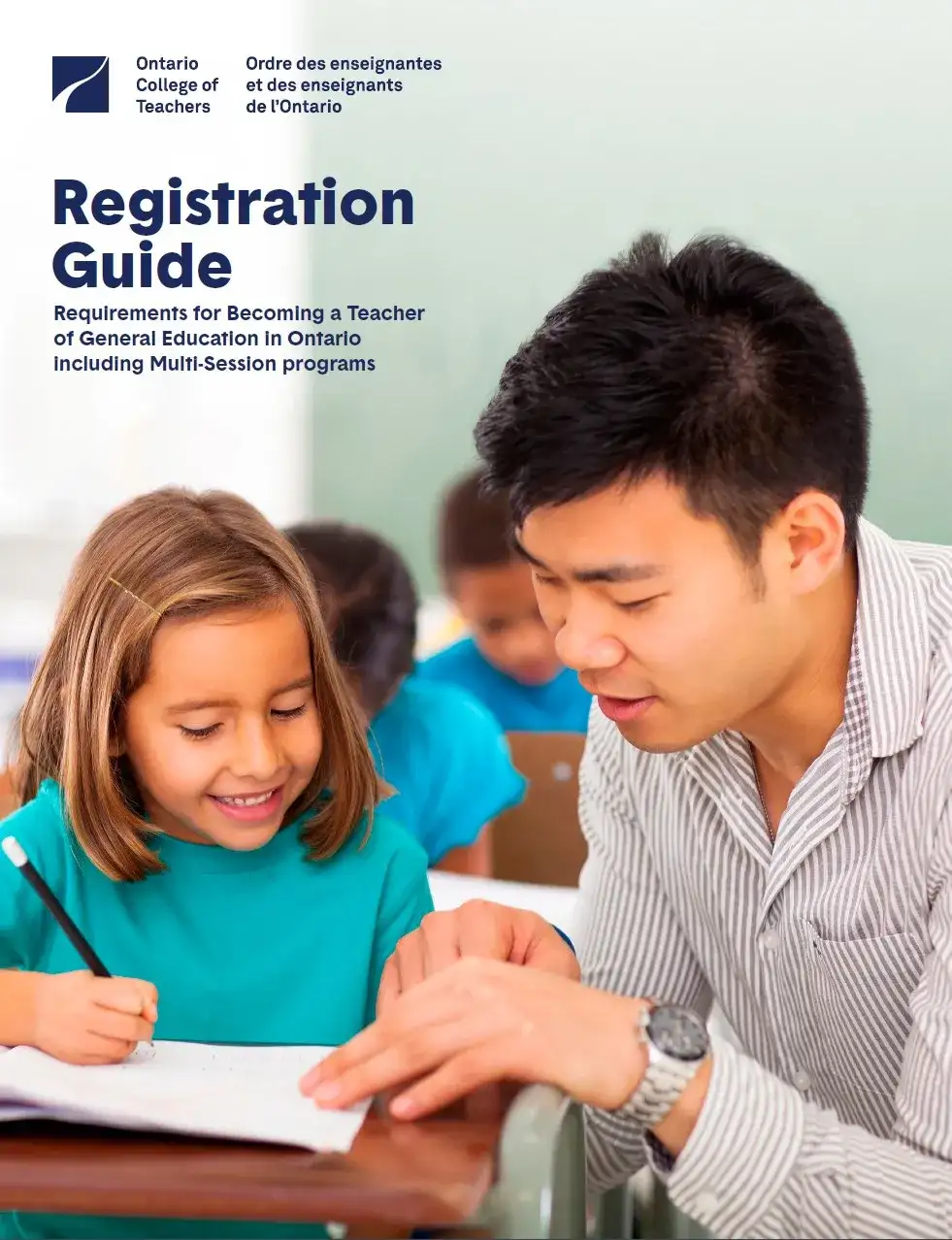
Requirements for Becoming General Education Teacher in Ontario
The guide to use if you are applying as a teacher of academic subjects from Kindergarten to Grade 12.
Brochure that explains the College's jurisdiction and the different methods the College uses to resolve complaints made against teachers.
Responding to the Bullying of Students - Professional Advisory
The Council of the Ontario College of Teachers approved this advisory to assist members in their daily efforts to provide students a safe, inclusive and accepting school climate that helps all students reach their full potential.
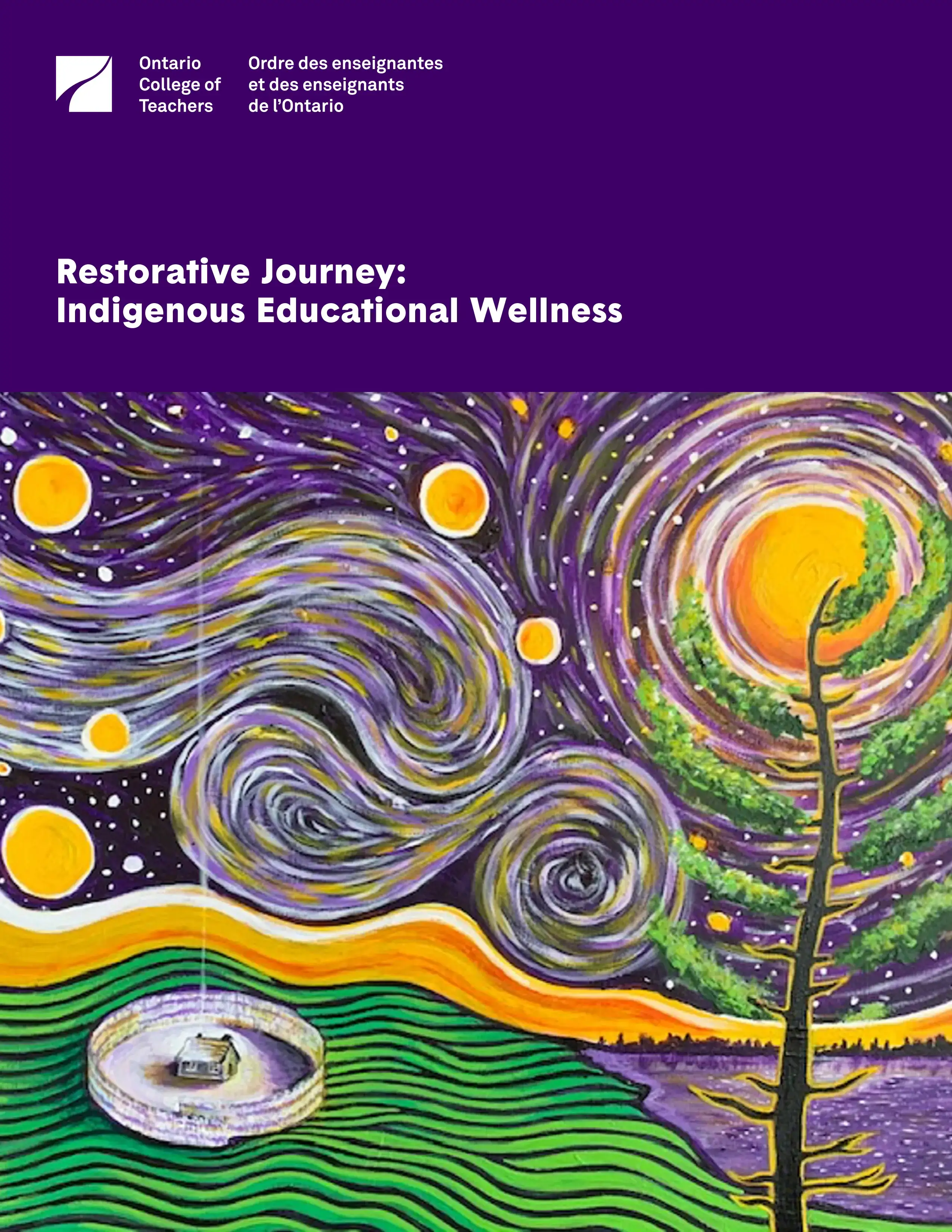
Restorative Journey Indigenous Educational Wellness
Six Nations artist Elizabeth Doxtater worked in dialogue with members from Six Nations communities and in friendship with the Ontario College of Teachers to develop this resource in a way that inspires the ethical pursuit of Indigenous educational wellness.
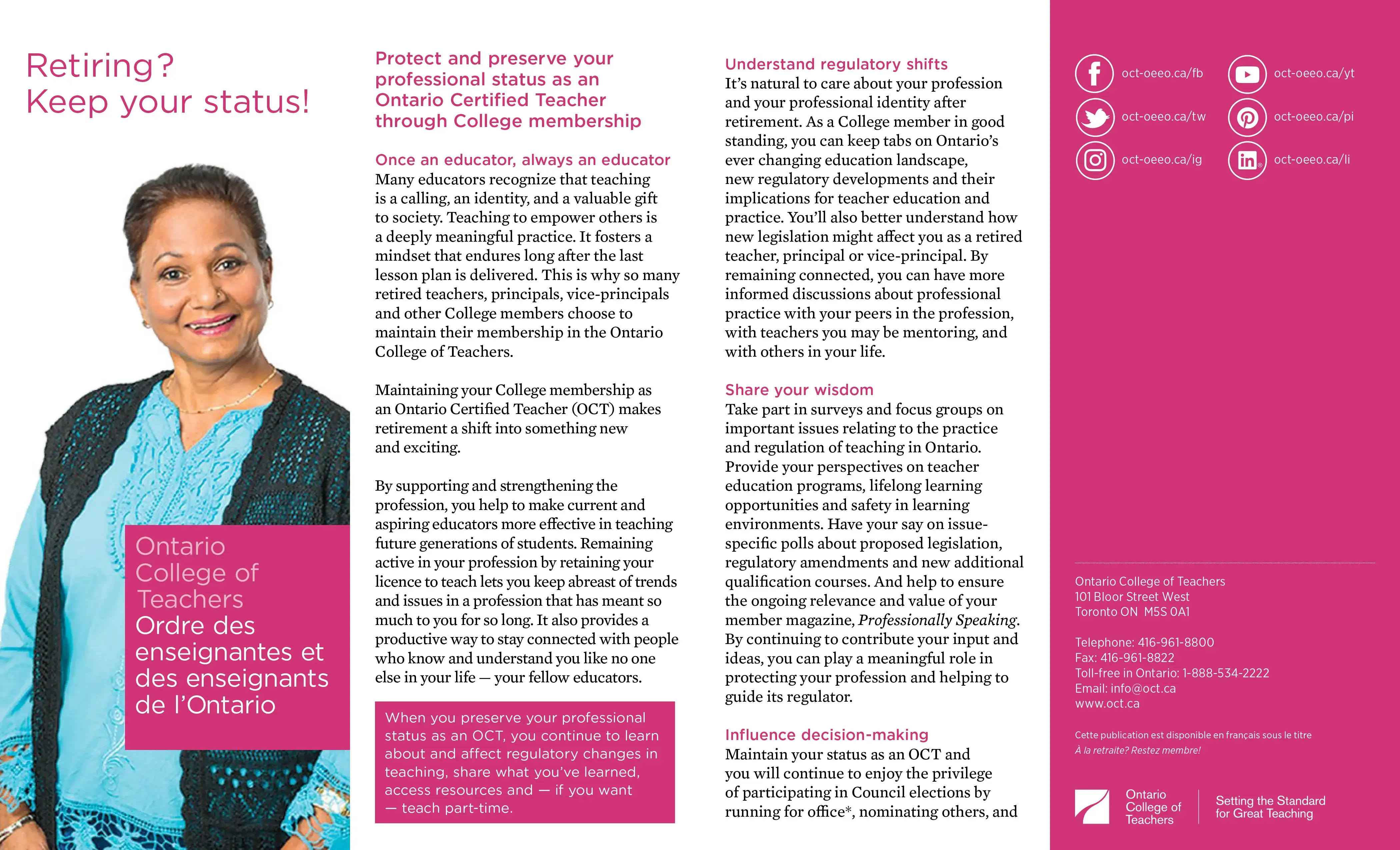
Protect and preserve your professional status as an Ontario Certified Teacher through College membership.

Self-Reflective Professional Learning Tool
A workbook for teachers to use on their own.

Ontario's teaching profession regulates itself. This means that the people of Ontario trust teachers to govern their own profession using their collective specialized knowledge, skills and experience.

Brochure outlining the mandate of the College.

Serving the Public Interest Chinese
Brochure outlining the mandate of the College.

Serving the Public Interest Italian
Brochure outlining the mandate of the College.

Serving the Public Interest Punjabi
Brochure outlining the mandate of the College.

Serving the Public Interest Spanish
Brochure outlining the mandate of the College.

Serving the Public Interest Tamil
Brochure outlining the mandate of the College.

This review of the language competencies required of teachers for effective professional practice reveals that teachers' language competencies are diverse and extensive.

A two-sided poster listing the standards of practice and ethical standards that are the foundation of teaching in Ontario.

State of the Teaching Profession 2003
Answers to questions on confidence in system, positives and negatives of teaching, good teaching, public affairs, accountability, role of parents, mentoring, age and gender.

State of the Teaching Profession 2004
Answers to questions on teacher's role, testing, most enjoyable, challenging aspects of teaching, confidence in system and gender.

State of the Teaching Profession 2005
Answers to questions on school problems, reforms, career and professional development, multi-year agreement, initial education and public perception of teaching profession.

State of the Teaching Profession 2006
Answers to questions on stress, career planning, changes in education, student success factors, parent-teacher relations, age of consent, voting in College election.

State of the Teaching Profession 2007
Answers to questions on career satisfaction, challenges and retention, professional designation, classrooms, over-supply and cyber-bullying.

State of the Teaching Profession 2008
Answers to questions on professional designation, advisories, Additional Qualifications, College facilities, membership renewal and card use.

Steps to Take if a Complaint is Filed Against You
Brochure outlines the complaint process and your rights. Includes a list of do's and dont's.

Steps to Take if You Have a Concern About a Member
Brochure outlines how to complain to the College about the conduct of a teacher, including a list of do's and dont's.

Student Physical Safety in Learning Environments - Professional Advisory
Sets out 4Rs of safety: recognize, respond, report and reflect - to help members safeguard students in all learning environments and situations.

Summary Report - Defining the Public Interest
Summary of a College study, Finding the Meaning in the Public Interest, which describes two competing views of the public interest in regulating professions.

Supervisory Officer's Qualification Program Application Guide
Prior learning assessment and recognition (PLAR) is a process that allows applicants to demonstrate prior learning for all or parts of the Supervisory Officer's Qualification Program (SOQP).

Supporting Students' Mental Health - Professional Advisory
This advisory is intended to help Ontario Certified Teachers support students with mental health concerns and understand how to assist in their support.

Answers to questions on professional standards, Additional Qualifications, associate teaching, College election participation, publication ban, labour mobility and the College magazine.

Annual survey of College members.

Brochure for high school students outlining the qualities, education and experience you need to become a teacher.

This quick reference brochure provides important information to new Ontario Certified Teachers on how to access College's services, resources and tools.

Tools and resources specifically designed for you.

Transition to Teaching Reports
Since 2002, the College has been surveying teachers in their first years to see what kinds of jobs they are getting and how they are settling into the profession. Browse through the complete archive.

Video Conferencing Guidelines - Professional Advisory
Video conferencing adds a new dimension to the way we connect with friends and family. When used effectively, it can also be a valuable tool in aiding instruction as it can enhance students' learning and keep them engaged while supporting their mental health, particularly when they are isolated from classmates, friends and extended family.

Who does what in Education Brochure
Who licenses teachers to teach in Ontario's public schools? Who oversees teachers' performance appraisals? Who sets the provincial curriculum? Find out inside...

Ontario Certified Teacher - or OCT - is the designation in English and is granted by the Council of the Ontario College of Teachers.